To clean range hood filter parts properly, you usually need little more than hot water, dish soap, and a degreasing soak. The right method depends on whether your hood uses metal mesh, stainless steel baffle, or charcoal filters, but the goal is the same: remove built-up grease without bending or damaging the filter.
A clean filter helps your range hood move air more effectively, reduces lingering odors, and lowers grease buildup around your kitchen. The job is straightforward if you use the right steps and avoid harsh scrubbing or soaking the wrong filter type.
Why it matters to clean range hood filter parts regularly
Range hood filters trap airborne grease, steam, and cooking residue before they settle on cabinets, walls, and ceiling surfaces. Over time, that grease thickens and restricts airflow.
If the filter is heavily clogged, your hood may become noisier, less effective, and harder to keep clean. In some cases, old grease can also create an unwanted fire risk near heat and flames.
Regular cleaning is especially important if you fry food often, cook with oil at high heat, or use your kitchen every day.
Know your filter type before you start
Before cleaning anything, switch the hood off and make sure the cooktop below is cool. If your hood is wired into a circuit you can safely isolate, switch off the power first. Always check the manufacturer instructions if you have them, because materials and finishes can vary.
Metal mesh filters
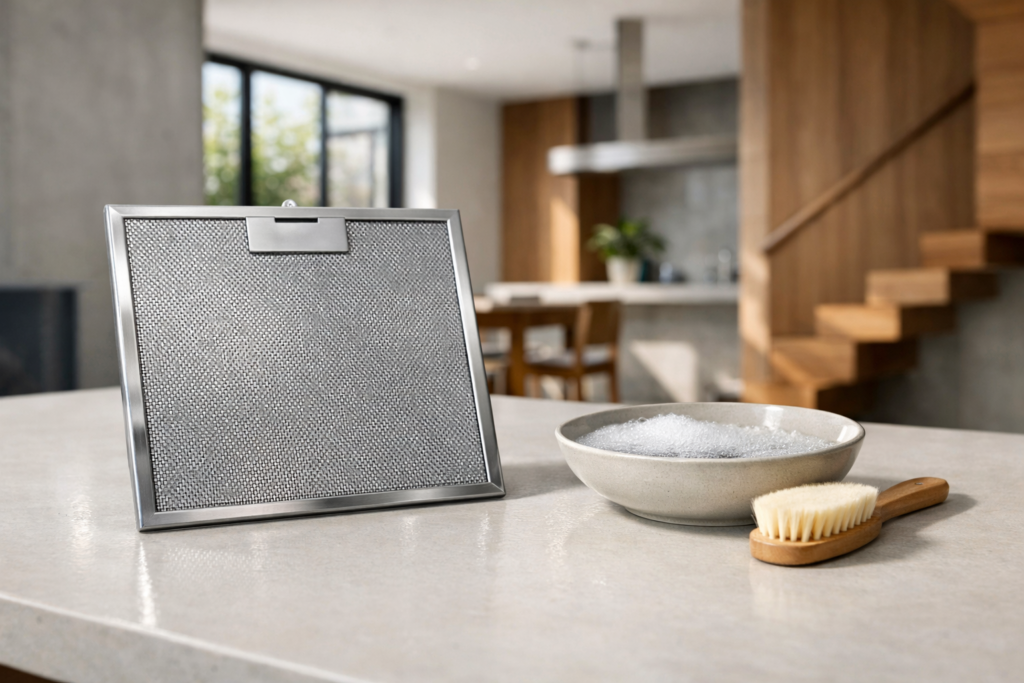
These are common in many recirculating and ducted hoods. They are usually made from layered aluminum or stainless steel mesh. They can often be washed by hand and sometimes in a dishwasher, depending on the maker’s guidance.
Stainless steel baffle filters
Baffle filters are more common on professional-style or high-power hoods. They have rigid metal panels with channels that catch grease. They are generally durable and easier to scrub than delicate mesh.
Charcoal or carbon filters
These are used in many recirculating hoods to help reduce odors. Most charcoal filters are not washable. They usually need replacing on a schedule set by the manufacturer. If your filter feels lightweight and looks like a black or dark pad or cartridge, do not soak it unless the instructions clearly say it is washable.
What you need
- Dish soap or another mild grease-cutting detergent
- Very warm or hot water
- A sink, basin, tub, or large tray
- A soft brush, non-scratch scrubber, or old soft toothbrush
- Baking soda, if grease is stubborn
- Microfiber cloth or clean towel
- Rubber gloves, if you have sensitive skin
Avoid steel wool, harsh abrasives, bleach, and strongly caustic cleaners unless the hood manufacturer specifically recommends them. These can scratch finishes, discolor aluminum, or damage protective coatings.
How to clean a greasy range hood filter
- Turn off the hood and let everything cool. Do not clean above a hot cooktop. If you have been cooking, wait until all surfaces are safe to touch.
- Remove the filter carefully. Most filters release with a small latch, tab, or push mechanism. Support the filter with your other hand so it does not drop or bend.
- Shake or wipe off loose grease. Hold the filter over a sink or lined surface and remove any soft buildup with a paper towel or cloth. This helps keep your soaking water cleaner.
- Prepare a hot soapy soak. Fill a sink or basin with hot water and add a generous amount of dish soap. If the filter is very greasy, add a few spoonfuls of baking soda and mix until dissolved.
- Soak the filter. Leave metal mesh or baffle filters in the solution for about 10 to 20 minutes. For very heavy grease, you may need a longer soak or a second round.
- Scrub gently. Use a soft brush or non-scratch pad to clean along the mesh or inside the baffle channels. Work carefully so you do not crush fine mesh or force grease deeper into corners.
- Rinse thoroughly. Rinse with clean warm water until all soap and loosened grease are gone. Any residue left behind can attract more grime.
- Dry completely. Shake off excess water and leave the filter to air-dry fully, or pat it dry with a clean towel. Do not put it back while damp.
- Reinstall the filter. Once fully dry, slot it back into place securely and make sure any latch clicks or locks properly.
Best cleaning method for different filter types
For aluminum mesh filters
Use the gentlest approach first. Aluminum mesh can bend more easily than rigid steel baffles. A hot soak with dish soap is often enough. If needed, use baking soda to boost grease removal, but avoid aggressive scouring.
If the manufacturer says the filter is dishwasher-safe, place it upright where possible and use a normal cycle. Keep in mind that repeated dishwasher cleaning can discolor some aluminum filters even when it does not affect function.
For stainless steel baffle filters
Baffle filters are usually more forgiving. They respond well to a hot soak and light scrubbing with a soft brush. Pay attention to inner channels where grease collects. Rinse well so no cleaner remains trapped inside.
For charcoal filters
Do not assume you can wash them. Many charcoal filters lose effectiveness once saturated and are meant to be replaced, not cleaned. If yours is a washable long-life carbon filter, follow the manufacturer instructions exactly, including drying time before reuse.
How to deal with stubborn grease
If the filter still feels sticky after one wash, do not jump straight to harsh chemicals. Try these safer steps first:
- Repeat the hot soak. Fresh hot water often works better than extending one dirty soak too long.
- Use more dish soap. A stronger detergent solution can break down grease better.
- Add baking soda. This can help lift residue without being as abrasive as many scouring products.
- Scrub in sections. Clean small areas at a time rather than brushing randomly over the whole filter.
- Rinse and inspect against the light. This makes it easier to spot blocked areas.
If grease has turned into a hard, varnish-like layer and the filter is old or damaged, replacement may be more practical than repeated aggressive cleaning.
Should you use the dishwasher?
Sometimes, but only if the filter instructions allow it. A dishwasher can be convenient for metal filters, especially baffle styles, but there are a few drawbacks:
- Aluminum may dull or discolor over time
- Heavy grease can redeposit if the filter is extremely dirty
- Large filters may block spray arms or fit awkwardly
- Some finishes or coatings may not tolerate dishwasher heat well
If you choose this route, remove as much grease as possible first and avoid mixing a very greasy filter with delicate items.
Clean the hood around the filter too
There is little point cleaning the filter if the surrounding hood is coated in grease. Once the filter is out, wipe the accessible underside and edges of the hood with a soft cloth and warm soapy water.
Take care not to let water drip into the fan, light fittings, or electrical parts. Use a damp cloth rather than a soaking wet one. Dry the surfaces afterward with a clean cloth.
If your hood is stainless steel, wipe with the grain where visible to reduce streaks.
How often should you clean it?
There is no single schedule for every kitchen. A good rule is to base cleaning frequency on how often and how heavily you cook.
- Light cooking: about every 2 to 3 months
- Regular daily cooking: about once a month
- Frequent frying or high-heat cooking: every 2 to 4 weeks
If the filter looks dark, feels sticky, drips grease, or the hood seems less effective, clean it sooner.
Signs it is time to replace the filter
Some filters can be cleaned many times. Others eventually wear out.
Consider replacing the filter if you notice:
- Torn or crushed mesh
- Loose frame joints
- Rust or corrosion
- Grease that no longer comes out well after repeated cleaning
- Charcoal material that is saturated, crumbling, or past its recommended service life
Always replace like-for-like according to your hood model. Sizes and fitting systems vary.
Mistakes to avoid
- Cleaning while the hood is hot: wait until it is cool to avoid burns
- Forgetting the power: switch off before working near lights or internal parts
- Soaking charcoal filters: most are not washable
- Using harsh abrasives: these can damage mesh and finishes
- Reinstalling while damp: trapped moisture can affect performance and encourage grime
- Forcing a filter back in: if it does not fit easily, check the orientation
Safety notes
Range hoods sit above heat, grease, and electrical components, so a little care matters.
- Make sure the cooktop is off and cool before you start
- Turn off the hood and isolate power if you can do so safely
- Keep water away from motors, switches, and light fittings
- If you cook on gas, take extra care around burner grates and any lingering heat
- Use gloves if cleaners irritate your skin
- Never mix cleaning products unless the product guidance says it is safe
Frequently asked questions
Can I clean a range hood filter with baking soda?
Yes, for metal mesh and baffle filters, baking soda can help loosen grease when added to hot soapy water. It is best used as part of a soak rather than as a harsh dry scrub.
How long should I soak a greasy filter?
About 10 to 20 minutes is enough for many filters. Very greasy filters may need a second soak with fresh hot water and detergent.
Why is my filter still sticky after cleaning?
Usually because grease remains trapped in the mesh or channels, or because soap residue was not rinsed away fully. Repeat the soak, scrub gently, and rinse thoroughly.
Can I put all range hood filters in the dishwasher?
No. Some metal filters are dishwasher-safe, but many charcoal filters are not washable at all. Check your hood manual or filter markings first.
Do I need to replace the charcoal filter?
In most recirculating hoods, yes. Charcoal filters typically need regular replacement because they absorb odors and eventually stop working well.
Conclusion
To clean a greasy range hood filter, start by identifying the filter type, then use a hot soapy soak, gentle scrubbing, and complete drying before reinstalling. Done regularly, this simple job helps your hood work better, keeps grease under control, and makes the whole kitchen easier to maintain.